Tiimo is one of the better-designed planning apps out there, and if you found this page while genuinely happy with Tiimo, that's a fair place to be. But a lot of people search "Tiimo alternative" for two specific reasons: they want a real desktop experience, not a phone app stretched onto a bigger screen, and they want to dump a messy pile of thoughts in one go instead of building routines block by block.
That second reason is where Doot lives. Tiimo is built around visual routines: icon based blocks laid out across your day, designed to make time visible for neurodivergent brains. Doot is built around the brain dump: you type or speak everything on your mind, exactly as messy as it sounds in your head, and the AI turns it into dated, prioritized tasks. Same audience, different job.
Credit where it's due. Tiimo is an award-winning visual daily planner, and the design work shows. Time blocks are represented as icons and color, not just text on a grid, which genuinely helps people who process time visually. Routines (morning routine, wind-down routine, medication reminders) are a first-class feature, not an afterthought. The community around it, especially autistic and ADHD users looking for daily living structure, is real and vocal (you'll find threads like "any better alternatives to Tiimo?" on Reddit, which tells you people are invested enough in the category to keep comparing options).
Tiimo is also priced reasonably for what it does, sits around $10 a month, and is genuinely mobile-first: widgets, notifications, and a phone-in-hand daily flow that works well if your day is built around routines you repeat.
The friction shows up in two places. First, Tiimo is mobile-first, so the desktop and web experience is noticeably thinner. If most of your day happens at a laptop, that's a real gap. Second, and bigger: Tiimo wants you to build structure. You create routines, place blocks, assign icons. That's great when your day is repeatable. It's a lot less great on the days your brain just wants to unload everything it's holding, in no particular order, and get a task list back without doing the organizing yourself.
That's a free-form capture problem, not a visual planning problem, and it's not what Tiimo was built to solve.
Genuinely: if visual, icon-based time blocking is what makes your day click, stay with Tiimo. It's the strongest tool in that specific lane. If you rely on it for daily living routines (medication timing, morning and evening sequences, ADHD or autism-specific visual schedules) with widgets you glance at throughout the day, nothing here replaces that. Doot doesn't do icon-based visual scheduling, and it isn't trying to. If that's the feature you actually use Tiimo for, switching would be a downgrade, not an upgrade.
Doot is the better fit when the thing slowing you down isn't "I don't have a visual routine," it's "I have forty things in my head and no patience left to sort them into a schedule."
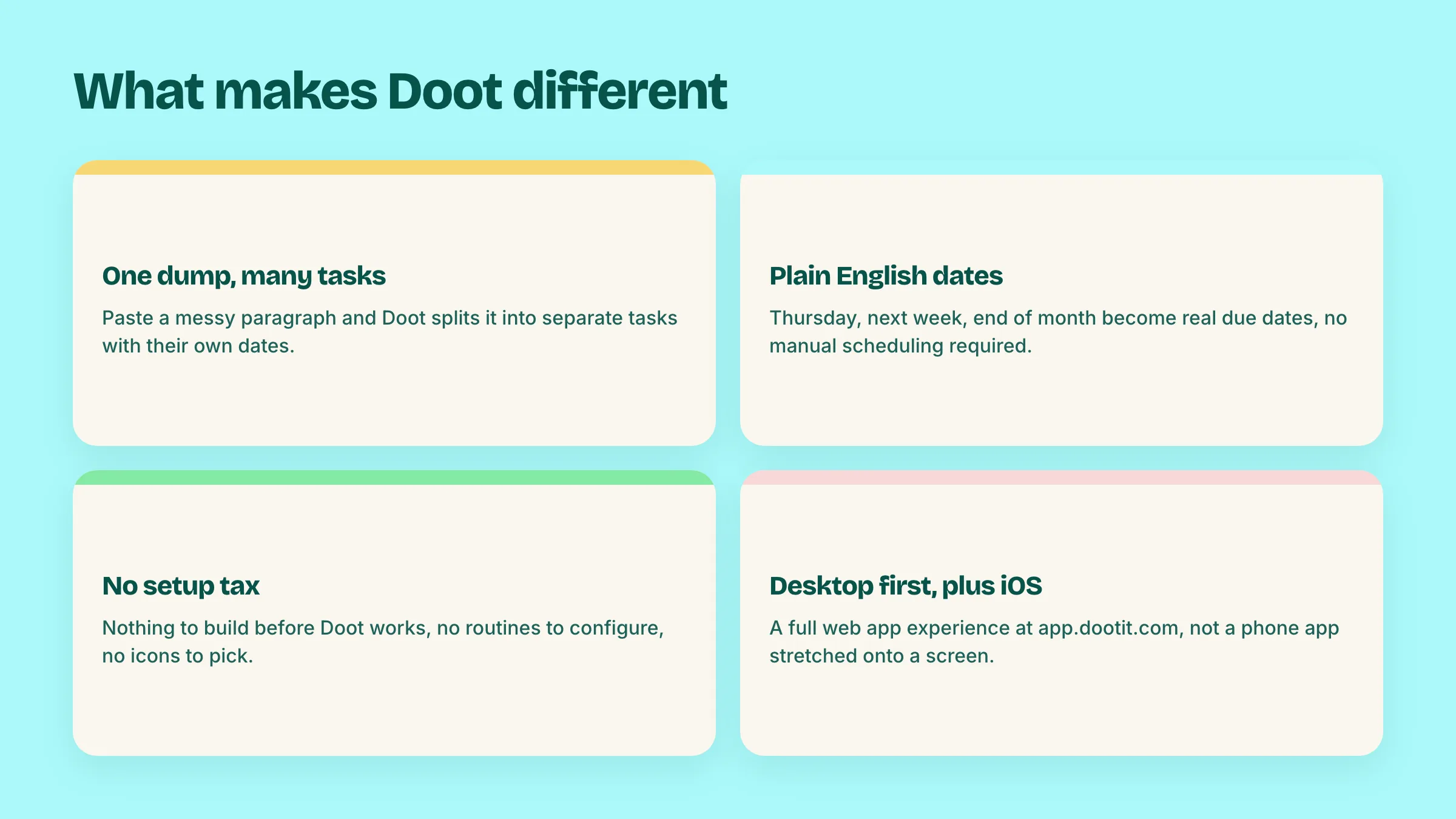
If your brain dump usually starts as a wall of text or a rambled voice note rather than a plan, Doot's brain dump is built to catch that directly.
Dump it into Doot and get back tasks you can actually act on. Type or speak, AI sorts the rest. See pricing here.
Try it free on the webarrow_forward